Cultural Tours
The Great Traverse: West to East
Cross the whole kingdom by road, from Paro in the west to Samdrup Jongkhar on the Indian border, through the least-visited valleys of the east.
- 12 nights · 13 days
- About 3,750 m (Thrumshing La)
- Cultural Tours
Tour overview
About this journey
Most visitors see only the west of Bhutan. This journey keeps going. After Punakha, Trongsa and Bumthang it crosses the Thrumshing La into eastern Bhutan, where the villages are smaller, the weaving is famously fine and the welcome is warm and unhurried.
Because it finishes at the southern border town of Samdrup Jongkhar, you never have to double back. It is ideal if you are continuing your travels in north-east India, with Guwahati airport a few hours' drive beyond the border.
At a glance
- Duration12 nights · 13 days
- Starts / endsParo / Samdrup Jongkhar (to Guwahati, India)
- DifficultyModerate — a road journey across the country
- Highest pointAbout 3,750 m (Thrumshing La)
- Best seasonMarch–May and October–November
- StaysHotels and simple guesthouses in the east
- GroupPrivate — your party only
- PricePersonal quotation on request
Your route
- ParoArrive
- Paro2 nights
- Thimphu1 night
- Punakha1 night
- Trongsa1 night
- Bumthang2 nights
- Mongar1 night
- Trashigang3 nights
- Samdrup Jongkhar1 night
Highlights
- Every major valley between Paro and Trashigang
- Thrumshing La pass and the cloud forests beyond it
- Mongar and Trashigang, the great dzongs of the east
- Chorten Kora in Trashi Yangtse
- Handwoven textiles at Khaling on the road south
- A one-way route with no backtracking
Day-by-day itinerary
The flight into Paro is part of the adventure: on a clear day the Himalaya slides past the window before the plane banks between forested ridges and settles onto the valley floor. Your guide meets you outside the small terminal with a white kata scarf, the traditional Bhutanese welcome, and a private vehicle is waiting.
After lunch, walk down through Rinpung Dzong — the "fortress on a heap of jewels" — with its carved galleries and monks crossing between prayers, and over Nyamai Zam, the covered wooden bridge below. Above the dzong, the round Ta Dzong watchtower houses the National Museum, a good introduction to Bhutanese art, masks and natural history. Finish along Paro's main street of painted wooden shopfronts. Meet your guide properly over dinner to talk through the whole journey, from one side of the kingdom to the other.
Drive: airport to hotel, 10–30 minutes
Overnight: Paro
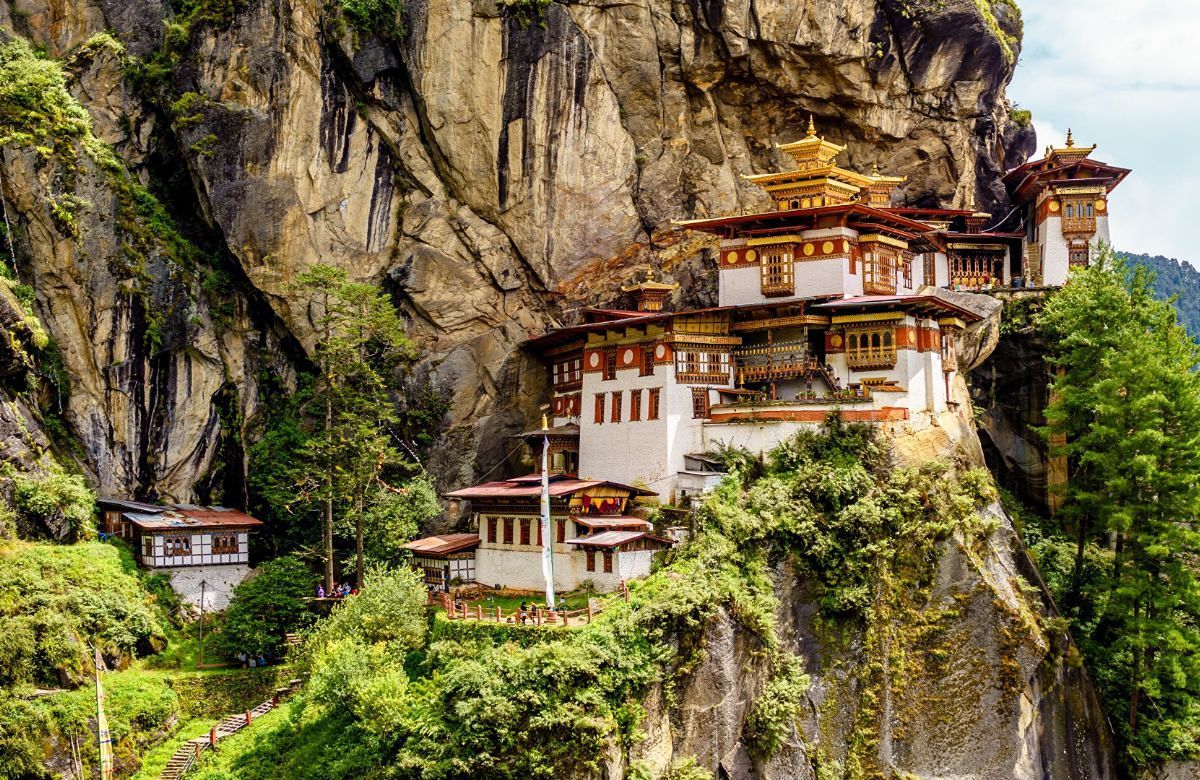
Paro Taktsang, the Tiger's Nest, clings to a cliff about 900 m above the valley floor. Legend says Guru Rinpoche flew here on the back of a tigress in the 8th century to meditate in the cave around which the monastery was later built. The trail climbs steadily through blue pine and oak hung with prayer flags; most people take two to three hours to reach the top, and a cafeteria halfway up offers tea with a view straight across to the monastery. Ponies can carry you part of the way up.
The final section drops down hundreds of steps to a waterfall and climbs again to the gate; bags and cameras are left in lockers before you enter the temples. After the descent and a late lunch, visit Kyichu Lhakhang, said to have been founded in the 7th century by the Tibetan king Songtsen Gampo, with its orange trees and turning prayer wheels.
Hike: about 5–6 hours return
Overnight: Paro
Drive towards the capital, stopping at Tamchog Lhakhang, a private temple reached by a swaying bridge of iron chains in the style of the 15th-century bridge-builder Thangtong Gyalpo, and at Chuzom, where two rivers meet.
In Thimphu, visit Buddha Dordenma and the takin preserve, watch students of the thirteen traditional arts at the Institute for Zorig Chusum (weekdays), and end the day at the National Memorial Chorten and with the evening view of Tashichho Dzong.
Drive: Paro to Thimphu, about 1½ hours with stops
Overnight: Thimphu
Climb out of Thimphu to the Dochula pass, about 3,100 m, crowned by the 108 Druk Wangyal chortens built by the Queen Mother. On a clear morning — most likely between October and February — the snow peaks of the northern border line the horizon. Take tea at the pass before the long descent through rhododendron, oak and then warmer forest into the Punakha valley, more than a thousand metres lower.
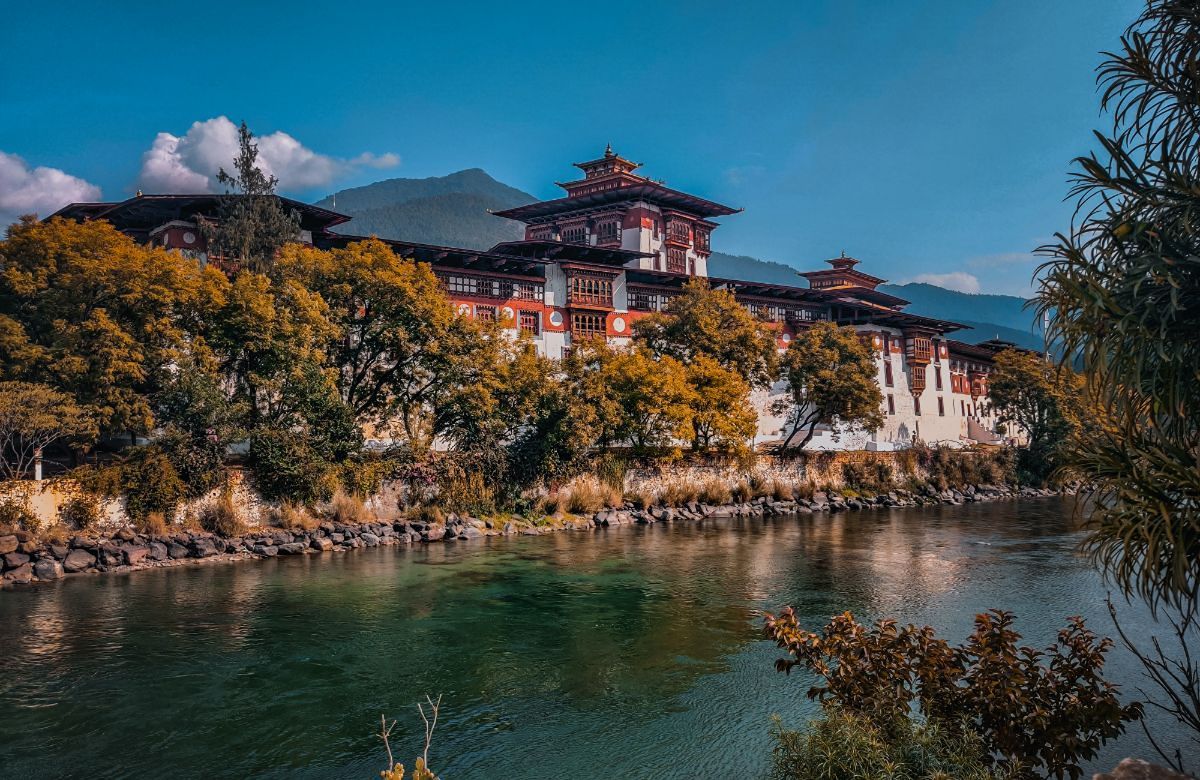
Walk for about half an hour through the rice fields of Sopsokha to Chimi Lhakhang, the fertility temple linked to Drukpa Kunley, the "Divine Madman", whose unconventional teachings explain the painted phalluses on the village houses. Couples still come here to ask for the blessing of a child, and your guide will share some of the saint's more colourful stories. Then visit Punakha Dzong at the meeting of the Pho Chhu and Mo Chhu.
Drive: Thimphu to Punakha, about 3 hours with stops
Overnight: Punakha
Today the road leaves the western valleys behind, climbing through forest to the Pele La, about 3,420 m, the traditional divide between west and central Bhutan, where dwarf bamboo covers the slopes. Beyond the pass, stop at Chendebji Chorten, a whitewashed Nepali-style stupa beside the river on the line of the old mule track.
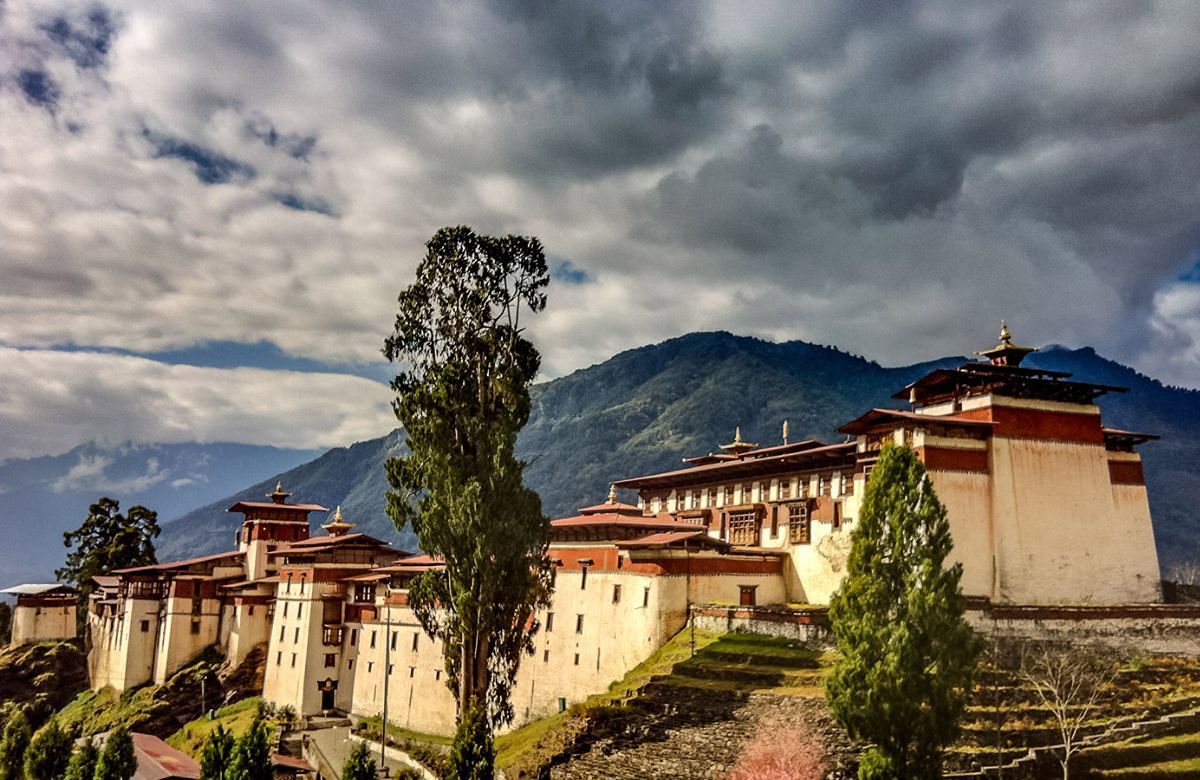
The first view of Trongsa Dzong comes from across the gorge, long before you arrive — a fortress spread down its ridge, once the key to all travel between east and west. Its governor, the Trongsa Penlop, became Bhutan's first king.
Drive: Punakha to Trongsa, about 5–6 hours with stops
Overnight: Trongsa
Visit Trongsa Dzong in the morning, then climb to the Ta Dzong watchtower above it, now a museum of the Wangchuck dynasty and its sacred treasures.
Cross the Yotong La, about 3,400 m, into the Chumey valley, the first of Bumthang's four valleys, where families weave yathra — thick, brightly patterned woollen cloth — on looms outside their houses. Continue to Jakar, Bumthang's main town.
Drive: Trongsa to Jakar, about 3 hours with stops
Overnight: Bumthang
Spend the day among the oldest temples in the country. Jambay Lhakhang is said to date from the 7th century; at Kurje Lhakhang, Guru Rinpoche is said to have left the imprint of his body in the rock; and across a small suspension bridge, Tamshing Goenpa was founded in 1501 by the treasure-revealer Pema Lingpa.
Climb to Jakar Dzong, the "castle of the white bird", in the afternoon, and taste Bumthang's buckwheat pancakes and noodles at dinner — fuel for tomorrow's crossing into the east.
Walks between temples, about 2–3 hours in total
Overnight: Bumthang
This is one of the great road journeys of the Himalaya. Stop first in Ura, a village of cobbled lanes and stone houses, then climb to the Thrumshing La, about 3,750 m, the highest point of the east–west road, through forests of fir and rhododendron.
On the far side the road descends almost 3,000 m in a few hours — through cloud forest, past waterfalls and along cliffs hung with ferns and orchids — into the warm, deep valleys of eastern Bhutan. Mongar sits on a ridge, unusually for a Bhutanese town, rather than in a valley.
Drive: Bumthang to Mongar, about 7–8 hours with stops
Overnight: Mongar
Visit Mongar Dzong in the morning, a relatively modern dzong built in the traditional way, and walk through the small town on its ridge. Then follow the Kuri Chhu and Drangme Chhu rivers through subtropical valleys of maize, bananas and bamboo.
Trashigang is the largest town in the east and a trading centre for villagers from the surrounding hills, some of whom still wear the distinctive dress of the Brokpa herders of Merak and Sakteng. Spend the evening in the small town square, where the whole community seems to meet.
Drive: Mongar to Trashigang, about 3 hours
Overnight: Trashigang
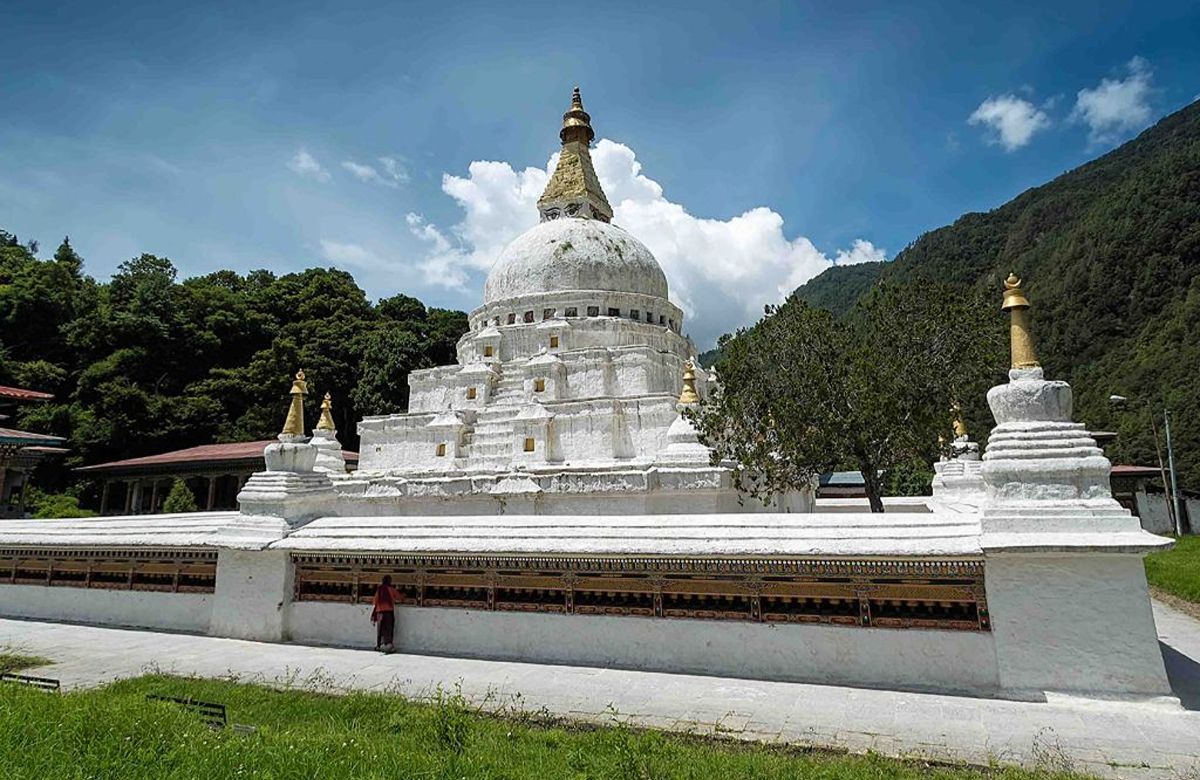
Drive north to Trashi Yangtse, stopping at Gom Kora, a small temple beside the river where Guru Rinpoche is said to have meditated. In Trashi Yangtse, visit Chorten Kora, the great white stupa modelled on Boudhanath in Kathmandu.
Trashi Yangtse is known for its wood-turners, who make the lacquered wooden bowls (dapa) used across Bhutan, and for its branch of the school of traditional arts. Return to Trashigang in the evening.
Drive: about 2 hours each way with stops
Overnight: Trashigang
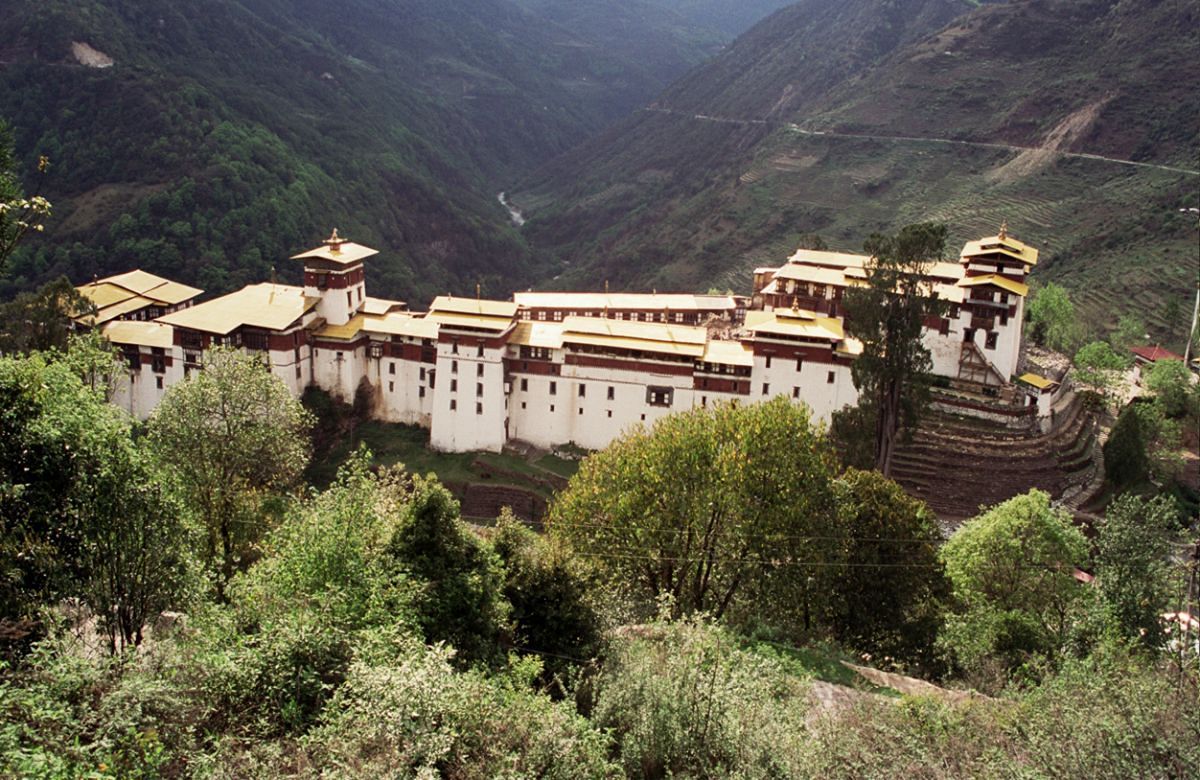
Visit Trashigang Dzong, built in 1659 on a spur high above the meeting of two rivers, one of the most dramatically sited fortresses in the country.
In the afternoon, your guide takes you to a nearby village to meet a farming family and see how life is lived in the east — perhaps with a taste of ara, the home-distilled grain spirit.
Short drives and village walks
Overnight: Trashigang
The long road south passes Khaling, home of the national handloom centre, where you can see some of the finest weaving in Bhutan. The road then winds down through forest into the foothills, with the plains of India spreading out below.
Samdrup Jongkhar is a small, friendly border town and the last stop in Bhutan. Enjoy a final Bhutanese dinner with your guide and driver, who have crossed the whole kingdom with you.
Drive: Trashigang to Samdrup Jongkhar, about 7–8 hours with stops
Overnight: Samdrup Jongkhar
After breakfast, say goodbye to your guide and driver and complete Bhutanese exit formalities at the border. We can arrange onward transport to Guwahati, about three hours away, for your flight or train.
Please check the Indian visa and entry rules that apply to your passport well before you travel — your guide will make sure the Bhutan side of the crossing goes smoothly.
Drive: Samdrup Jongkhar to Guwahati, about 3 hours
What's included
Included
- Bhutan visa processing (the US$40 visa fee is itemised in your quotation)
- Sustainable Development Fee for every night you spend in Bhutan, arranged by us
- A licensed English-speaking guide for the whole journey
- Private vehicle and experienced driver, including Paro airport transfers
- Accommodation in Department of Tourism–certified hotels of the category you choose
- Meals as set out in your quotation — full board is the usual choice
- Entrance fees for the monuments named in the itinerary
- Drinking water in the vehicle throughout
Not included
- International flights to and from Paro (we can book Drukair or Bhutan Airlines for you)
- Travel insurance — strongly recommended, although it is not a visa requirement
- Drinks, laundry, telephone and other personal expenses
- Tips for your guide and driver (always at your discretion)
- Optional activities not named in the itinerary
Gallery
Good to know
- The east has fewer hotels, and some are simple. We choose the best available and tell you honestly what to expect.
- Onward travel from Samdrup Jongkhar to Guwahati can be arranged with us; check the Indian visa rules that apply to your passport.
- Visa (US$40) and the Sustainable Development Fee are arranged by us and itemised in your quotation. See Visa & SDF.
Questions about this tour
Yes. We arrange the SDF for every night of the journey and show it as its own line in the quotation, so you can see exactly what goes to the government and what goes to the trip.
Always. Every departure is private, so the days, the pace and the hotel category can all be adjusted. Tell us what matters to you in the form below and we will reshape the plan around it.
Each tour lists a difficulty and the highest point reached. Bhutan is mountainous, so even gentle tours include stairs at dzongs and some altitude — let us know about any health conditions and we will plan around them.
Cultural Tours
The Great Traverse: West to East
- 12 nights · 13 days
- Moderate — a road journey across the country
- March–May and October–November
Private tour · Personal quotation · No obligation
Talk to our Thimphu team
Keep exploring
You may also like
Culture
- 5 days
- Thimphu · Paro
A first taste of Bhutan in five unhurried days: the capital's monuments and markets, then the climb to the monastery that clings to Paro's cliff.
4 nights · 5 days
Culture
- 7 days
- Thimphu · Punakha · Paro
The classic first journey: Thimphu, the 108 chortens of Dochula, Punakha's river-fortress and the Tiger's Nest, at a pace that leaves time to linger.
6 nights · 7 days
Culture
- 11 days
- Thimphu · Punakha · Trongsa · Bumthang · Paro
Cross the Black Mountains to Trongsa and on to Bumthang, the cluster of valleys where Buddhism first took root in Bhutan.
10 nights · 11 days
Plan your journey
Send Inquiry & Get a Quotation
Interested in The Great Traverse: West to East? Tell us your dates and who is travelling, and we will send a day-by-day plan and a personal quotation — with the SDF and visa fee shown as their own lines.
- Every journey is private and tailor-made
- Visa, SDF, hotels, guide and transport handled for you
- No obligation — ask as many questions as you like